Sometimes It Really is Brain Surgery
What I Did on My Summer Vacation**

TL;DR
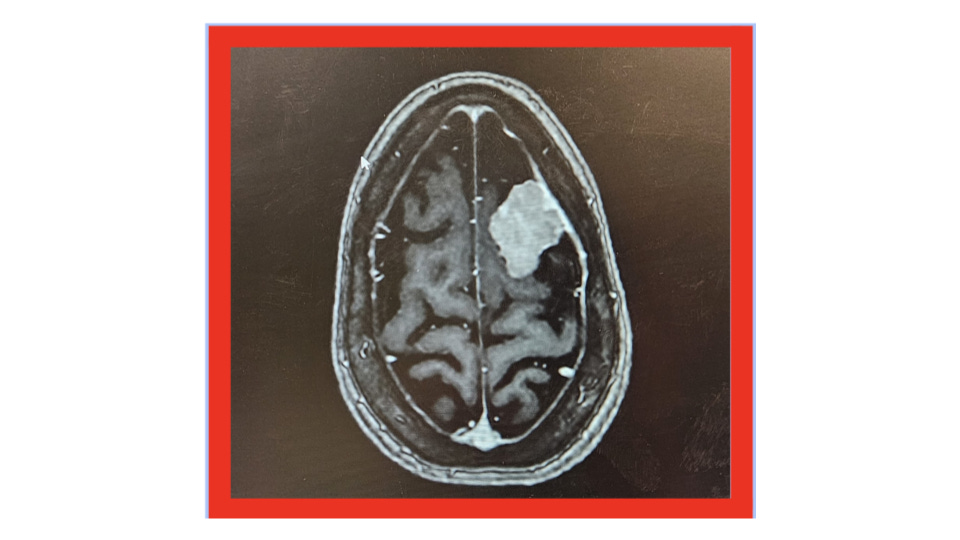
I had a brain tumor (a meningioma) removed.
Acknowledgments
I have a lot of privileges, and they helped me enormously.
I want everyone to have the same opportunity, whatever their identities or situations.
Anonymity
All names are pseudonyms, except my spouse’s. (This is common in my field of anthropology.)
Caveat
This is a layperson’s first-hand account of her experience, not at all a source of medical information. I may have made mistakes.
And as long as I’m making prefaces
No Generative AI was used in any way for research or writing or brainstorming, ahem, or editing.
This piece may not be used to train large language models or generative artificial intelligence.
"No Generative AI Training: Unauthorized uploading, data mining, ingestion, or use of this manuscript—in whole or in part—to train artificial intelligence technologies, machine learning models, or large language models is strictly prohibited. No right is granted to use this text for synthetic content generation or algorithmic adaptation."
"The Recipient agrees not to upload, input, or otherwise transmit the Work, or any portion thereof, into any generative artificial intelligence system, large language model, or consumer-facing AI tool (such as ChatGPT, Claude, or similar technologies) for any purpose, including editing, summarizing, evaluating, or machine learning training, without the Author's prior express written consent.” (from Melanie Conklin)
License: Attribution-NonCommercial-NoDerivatives 4.0 International - Creative Commons
** An entirely different post could be written about my irritation with the concept of “summer vacation” for professors, because I am a product of the Protestant ethic and emphasize how hard I work in the summer, though without teaching, and that even just contractually my job is only 40 percent teaching, unlike K12 teachers, and that what “counts” is scholarly productivity, and then I would have provided a rant about the labor conditions of higher education….you’re probably going to be glad you got this one instead of several other topics…..
The Origin Story
About four years ago I started to notice that sometimes I had to close one eye to be able to read street signs, especially at night. Like so many aspects of decline, it came on gradually. When I got new glasses at an independent outlet, I said I was kind of seeing double. The enthusiastic person who had helped me said something about grinding prisms (it sounded so mysterious) but that they don’t do that. I mentioned it at my next annual ophthalmologist appointment. The weird thing was that my spouse, a longtime type-1 diabetic, had had double vision the year before and it resolved on its own, so I wasn’t worried.
“Well,” “Greg” (all names are pseudonyms) said (he’s a friend as well as my eye doctor), “One of the reasons would be very serious, like a stroke, but you would have known by now. Probably it’s not serious but just to rule out a fluke, let’s have you get an MRI.”
He didn’t seem concerned. I wasn’t concerned.
I went to a brand-new facility far into our suburban area, nearly twenty-five minutes from my house; in the context of South Bend, that’s very far. It was a few years after Covid restrictions had begun easing, but I was still always cautious. I asked the workers to wear masks and—-it was a brand-new medical facility—-they had trouble locating any.
I’d never had an MRI before. People had talked about how claustrophobic they became, but for me it was kind of relaxing. I wished I had John Cage’s talents and could have written a musical piece about it, capturing the banging and clanging and tapping, metal and electronic sounds.
A few hours later—it was a Friday afternoon—I got a notification that there were results.
A meningioma.
“FINDINGS: There is a 2.0 x 1.8 x 1.8 cm dural based enhancing mass over the left frontal convexity, which is T1 isointense and T2 iso to slightly hyperintense. There is mild mass effect on the adjacent left frontal lobe parenchyma. Minimal T2 FLAIR signal abnormality in the periventricular and subcortical white matter. Globes and orbits are gross unremarkable. 1.8 cm mucous retention cyst in the left maxillary sinus. Optic chiasm is unremarkable. Probable tiny developmental venous anomaly left frontal lobe.
“IMPRESSION: 1. No acute intracranial abnormality. 2. Extra-axial avidly enhancing lesion in the left frontal convexity, likely reflecting meningioma. There is mild mass effect on the adjacent left frontal lobe brain parenchyma. No midline shift. 3. Minimal chronic microvascular ischemic changes.”
I read them over and over, pit in my stomach. I looked up all the unfamiliar words, looked up “brain tumor” on the Mayo Clinic website.
I didn’t know what to do.
I called my brother, “Jonathan,” a pediatrician, and he did his best to translate it to me.
I emailed eye-doctor Greg, reluctantly, because I hate to ask for favors, and it was the weekend.
Basically he said it was a small tumor, nowhere near the optical areas, and we would probably just watch it. The office set me up with a neurosurgeon.
Dr. Local was calm. “You can decide if you want to remove it, so you don’t have to worry about it, or we can watch it. If it grows, we can discuss it later. If you have symptoms, that would change things.”
What kind of symptoms?
It’s near my frontal lobe, the site of cognition. Symptoms would be seizures, fainting, dizziness, headaches, loss of cognitive sharpness, including memory issues, or a change in personality which I probably wouldn’t notice but the people close to me would.
I’m a professor, a writer, a speaker, someone who uses her brain pretty darn often.
But….no symptoms at all. Maybe this little tumor would just stay in its little self-carved lane, beneath my skull. In fact, maybe I’d had it a long time. People probably have them all the time and they don’t cause any trouble. For all of human history people have probably had them without knowing. (And how did that turn out for all of them?)
Here’s the plan: we’ll do another MRI in six months, then in a year, and another year, and see if we have to keep following it.
Meanwhile I used a temporary (Fresnel) prism and later incorporated a prism into my eyeglass prescription to correct my “diplopia” (that’s the technical term for double vision, one of a lot of new terms I’ve been learning).
It’s just an “incidental finding,” I kept saying. I had no symptoms. I might have had it for years already.
This year, it grew. Again. It’s almost double where it started.
I’m in my sixties. My parents are 89 and 94. If it grows a centimeter a year it will fill up my whole skull soon.
April 2026: Figuring It Out
I’m meeting with neurosurgeons virtually to schedule the surgery. I had appointments at two different facilities in a nearby state, one academic and the other a large hospital system. My local neurosurgeon’s office, after a delay, had initially referred me to the wrong branch of the academic hospital, but after some time, we got it straightened out.
Meanwhile I did not cancel the appointment with my local neurosurgeon, in case the others didn’t work out.
But they did.
June 22, 2026: Everything is Ready
And now I have everything set up:
I found a period of nearly seven weeks between all the preexisting travel and professional obligations that had accumulated for the summer. The surgery date, June 30, has been selected with the precision of, um, brain surgery? (That comparison is forever retired for me.) I return from a talk on a Wednesday and leave for the other state and the round of tests two days later, on Friday.
I selected a surgeon and a facility with a brain tumor specialty. My entire extended family lives in the area, and several of them are medical people.
I’ve had two types of bloodwork and an EKG done in South Bend.
I have memorized the password to my MyChart account, and linked the new and my preexisting accounts.
Insurance preapproved the surgery and a two-day hospital stay—in network!
I signed up for Medicare Part A, hospitalization, to which I’d been entitled for a while, but since I’m still working it hadn’t occurred to me that I might need it.
I have drafted an email to send to a few very close friends, explaining that I will be having this surgery and that either my husband or one of my daughters would update them—and please don’t all call and text, though you can send good thoughts.
I have received a package from the hospital containing an “incentive spirometer” to strengthen my lungs, which I’ve been using; disinfectant soap to use the night before and the morning of the surgery; mouthwash to use similarly; an electrolyte drink, Ensure pre-surgery. And a lot of paperwork, plus redundant electronic check-ins for every appointment.
I have sent questions to the presurgery team and to the surgery team and to the billing office, and they have been extremely responsive.
I’ve driven five times across the border to a neighboring state because the doctors and hospital don’t have a licence to practice medicine outside the state, and made calls from parking lots. The default browser on my phone doesn’t allow the sound on videocalls using their platform so mostly we’ve resorted to phone calls. (I have been using DuckDuckGo for privacy, and I have to change some of the settings, but….)
I’ve handed over my sourdough starter to my friends “Florence” and “Leo,” who live around the block and will check on the house and mail, and water the plants.
I’ve packed a small bag with items for the hospital, and made a list for the other things (reading glasses, phone, ipad, chargers, books, good black and herbal tea).
I’ve assembled passwords for our financial items (some of them)...in case I can’t manage this on my own.
I’m trying to get ready to have at least a month without much physical activity other than walking, and with a lot of dependence on other people.
I’m not used to doing that.
But it will be a psychological and medical adventure, and assuming all goes well, I will report back.
The Move
I packed up for three days at my parents’ house, hoping to get in some final long walks and at least one more yoga class, which I did as the guest of one of my nieces. Lionel and I both like to drive but since I would be not be driving after the surgery and since I know my way around better than he does, I drove more. My daughter “Sophia” (pseudonym) flew in from Los Angeles.
On Saturday morning we drove down to the hospital’s Cancer Pavilion for a CT scan and an MRI.
This brand-new building reminded Lionel and me of the Mayo Clinic, where he had gone twice. It was light-filled and airy, with a sweeping staircase, a grand piano, and high-quality copies of artwork from the renowned local art museum. The staff were courteous and everything was seamless. The CT scan took just moments and the MRI was about half an hour, “with contrast,” which meant I had to have an IV. I had alerted them that I’m a “hard stick,” so they allowed extra time in case they had to call in an expert from what I thought they said was the PICU to insert the needle, but the technician was quite skilled herself, and it went in easily. They chose a spot midway up my arm, rather than in my elbow or hand, and it worked fine. She had a warm pack, which helped bring out the vein.
The clanging and the banging and the tapping and the drumming and the alarms of the MRI were both similar to and different from the ones back home; I have since realized that they are just more intense versions of the “crystal bowl sound baths” that one of my yoga teachers uses, which I encountered for the first time last summer, and which I now sometimes use to soothe my monkey mind. Unlike the MRI at home, this one had a set of mirrors which allowed me to see—blurrily, because my distance vision is terrible without my glasses—the technicians in the control room.
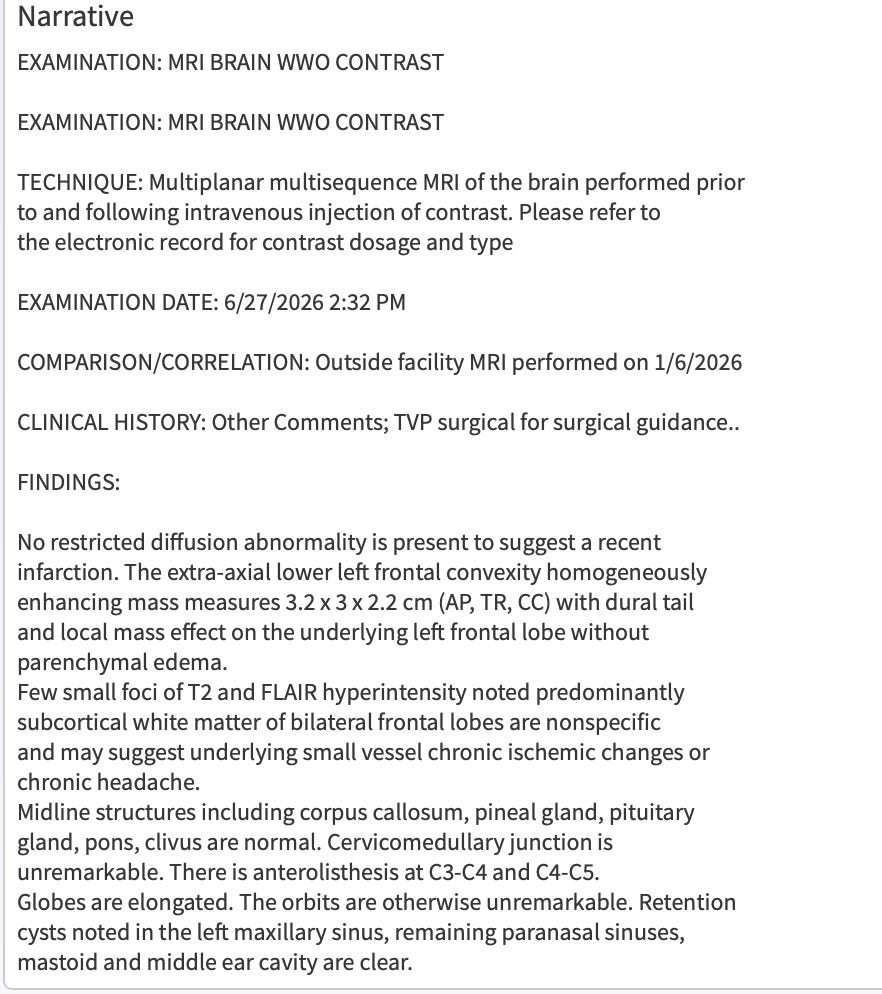
The tumor keeps growing. It was initially 2.0 x 1.8 x 1.8 cm and is now 3.2 x 3 x 2.2 cm. Though at my first neurosurgery visit the surgery was borderline elective, clearly it has become essential.
One of the doctors told me it was too large to be treated with radiation.
So, I feel comfortable with my decision to proceed.
****
After the two tests on Saturday, we went to a late lunch and then relaxed at night. On Sunday, we met my sister “Sandra,” my brother-in-law “Kirk,” and their daughter for lunch, and went for a walk in a newly refurbished, popular nature preserve, with tertiary growth, amenities, and trails. Then we had a group of eight for dinner: my brother Jonathan and his wife “Anne,” Sandra and Kirk, Lionel, my parents, and me. On Monday, the day before the surgery, and a day devoted to relaxing and waiting, we spontaneously went to lunch with one of my nephews, who had been traveling, and my parents and Sophia.
I had a ten-minute video meeting (this time on my laptop, so it worked fine; I used a different browser) with the intake doctor, Dr. Out-of-State, who assured me that everything would be fine and that Dr. Precision, the doctor who was performing the surgery, is someone he would’ve chosen for his own family, and with my own good health, he expected good results. Dr. Out-of-State, a renowned expert in certain areas of brain cancer and a co-founder of the brain tumor center, was consistently comforting.
As scheduled, between 2:00 pm and 4:00 pm on Monday they called from the hospital to say that my arrival time was 5:30 am the next day, with surgery scheduled for 7:30 am, which seemed good, because then it would be over quickly. And then they called again to say that things had changed because some things had to be moved around and now my arrival time was 10:00 am and surgery was scheduled for noon. That of course made things easier in terms of preparation and departure. (I was looking for all the good omens I could find.)
We stayed a little while longer; I took another little walk, and then I said goodbye to my parents, who were quite emotional, and we moved to my sister Mabel’s house, where I would be returning, to recover. Mabel is a nurse. She has a loving Golden Retriever, Mack, and had prepared with everything I could possibly need: clean sheets, a pile of pillowcases (I was supposed to change them daily), lots of clean towels, coffee and tea and fruit and yogurt and vegetables.
After dinner at Mabel’s was over, Mabel, Lionel, Sophia, who was also staying there, and I went over the paperwork that I had and the bags I had packed. The more we read, the more anxious I got, especially when it came to the restrictions for recovery.
We talked about what I had to do that night—a disinfectant shower and a mouthwash rinse, clean pajamas and clean sheets and my final food—and what I had to do the following morning—another disinfectant shower and a mouthwash and drinking a pre-surgery drink and taking my levothyroxine and having my last clear beverages two hours prior to departure, which made it 8 o’clock. We did all that, and I brought my license and insurance card and things to read which I would entrust to Sophia and Lionel, who were accompanying me for the day.
I had a lot of trouble sleeping.
As we entered the elevator to go from the parking garage to the 100-year-old Main Hospital (they are building a brand-new one across the street, for $2 billion, to be completed in 2029), a woman came in and said she had had a double lung transplant here a few years ago; she looked amazing. I told her what I was doing and she said I would be fine, and God is good. And I thanked her and appreciated all the blessings that people were giving me from any tradition and any source of faith.
Waiting
Even though it was an unusually hot nearly-100-degree day, the 100-year-old building managed to condition the air adequately. How many retrofits had that poor building experienced in its life?
Only one person could come from the waiting room into the pre-op, which we assigned to Lionel, and we designated Sophia as the comms team because she is much more adept at technology and responding to things. She was the post-op person. There was a colored board in the waiting room with each person’s case number, so the two permitted visitors could keep track: preparation, surgery, recovery, etc. (Several other family members had asked to come wait with Lionel and Sophia, but the hospital had serious restrictions on visitors.)
They brought me back to the pre-op site (“Name? Birth date?”—questions I was asked dozens of times), where an IV was inserted by a young woman chewing gum, her hair long, dark, bouncy, and she casually put this IV into my hand, “like butter,” as one of the other staff members said, observing in awe. Expertise can look a lot of different ways.
I could hear all the conversations around me: the stalwart orthopedic patient, with his wife attending, and right across the curtain from me, the poor young woman with endometriosis finally getting a hysterectomy after years of pain that healthcare providers had dismissed. Her visitor was her mother.
I spoke with the anaesthesiologist, and another person from the anaesthesiology team, and a fifth-year resident in neurosurgery, who was absolutely committed to learning more and more. Before medical school she had been a nurse, had done work at Mayo Clinic, and was planning to do two more years as a neurosurgery resident, with an additional year as a scholar, doing research. It would total eight years after medical school. The nurse and the resident had spontaneously offered views of Dr. Precision being a terrific surgeon.
“Would you say that about any doctor?”
“I just would not have said anything, unless they asked, and then I would have said, ‘He’s a good doctor.’”
Then finally, I met the actual head surgeon, Dr. Precision, whom I’d previously seen only virtually.
Dr. Precision arrived, a competent, energetic, reassuring person. He answered questions, explained the steps, and left to go get ready.
Then they took me away, and I was in anaesthesia, and I breathed some oxygen and….I woke up.
Waking Up
Sophia was there looking relieved and I don’t remember that much about what happened right then. It was 6:45 pm. I had a really bad pain from a tight white gauze cap that they wrapped around my skull to reduce swelling, and it really hurt my ears. I have learned now how to put my glasses through some of the gauze, but only my one pair of glasses that are titanium and flexible are able to be used (not my reading glasses).
We stayed in some waiting area, waiting for a room in the step-down ICU; I took that as a good sign that I was not in too much danger, since I didn’t have to go to the full-fledged ICU. Sophia and Lionel had been in and out, eating various things, and left to go back to Mabel’s around 10:30.
They took me to a room on the fifth floor, and the clock said 5:30, so I remarked on the time, completely ready to believe that it was now 5:30 am, but it turns out the clock was not working and it was not 5:30! (This is a cognitive test lol?) I had a CT scan at 3:00 AM, which involved my nurse, Malik, and a transport person wielding me through this incredible labyrinth of hallways and carts and buckets and signs and turns and into an elevator and out of an elevator and into a room in which I was able to move myself onto the table for the CT scan, which was very quick. Then we repeated the adventure back up to my room, and apparently I slept.
The Next Day
I had a nurse named Ahmed though he said, “You can call me Andy because it’s easier.” And I shook my head and said, “Americans Americans, how hard is that?” And later when Sophia was here, she also, being very sensitive to cultural inclusion, asked about this, and it turns out Andy is his middle name, but it’s actually ANDI [a different spelling and pronunciation]. He said he’s Indian, but then we got his story. He’s from Kashmir, on the Indian side, but then lived in Saudi Arabia for ten years, and then had his education and training in Canada.
I was hooked up to quite a number of things (IV, catheter, monitors, extra IV port just in case). My blood pressure got tested every hour. Like the reformed perfectionist that I am, I rejoiced every time I got the external validation that “That is perfect blood pressure.”
I did a little walking, and then later some more walking. Dr. Precision came in and checked on me early in the morning on Wednesday, and various people checked on me all day long, particularly because I am taking steroids to reduce the swelling, but they elevate my blood sugar, which then necessitates some insulin. They also are giving me Pepcid to mitigate the effects of the steroid. One thing leads to another….They’ve taken my temperature and my oxygen was low, but then it came back and they checked my blood pressure and my pulse and my respiratory rate. And at one point, my nose was running and everybody was worried that maybe it was cerebral-spinal fluid so they were collecting it, but the resident told them not to bother.
The food situation is a little bit confusing. I asked Malik if I was going to eat and he said, “What do you want to eat?” They sent a box of pudding and carbonated, citrus, drink, and applesauce and flavored yogurt and some other things. I ate the applesauce.
Andi asked, on Wednesday morning, what I wanted to eat. I said maybe some oatmeal and eggs and fruit and something like that? Meanwhile, a regular breakfast was delivered of a kind of scrambled egg thing with a dry chicken sausage and coffee and something else.( Turns out my memory isn’t as sharp as I want it to be.) Later the breakfast I ordered also arrived.
Lunch was the same: they brought a fish Po’boy with coleslaw and milk and the same grapes and cantaloupe and honeydew from the night before (which hurt my stomach and didn’t appeal to me at all, being just a few hours post-op). But I also ordered something gentler.
And dinner was barbecued chicken with roasted potatoes and broccoli and a piece of apple cake and iced tea and milk and butter, but I had also asked for some vegetarian soup and rice and applesauce, which also came. I had also requested tofu and broccoli, but those were not available. I am not sure why they send milk with every meal. I was never asked about my food preferences. Sadly, it seems like they waste a huge amount. There are many things I am not able to control and it is good to have a sense of humor and an exit plan. (I will recommend more consultation about the food.)
July 2, 2026: The Other Side
Modah ani lefanecha. Melach chai v’chayam. Shehechezarta bi, v’chemla rav v’emunatecha.
I am grateful to be awake, alive. There’s a Jewish prayer that we are to say on waking in the morning, thankful to the Spirit that we have another opportunity to be alive. It felt right to say it today.
I realized before the surgery that I was at peace with the idea that I might not get through it. When Jewish children are named in a community ritual, their parents express the hope to raise them to Torah, chuppah, and ma’asim tovim, Jewish learning, marriage, and good deeds. I feel satisfied that I have done that, at least to some extent. It could be considered a complete life, if it came to that.
Clarity is a good result of this.
Last week I told a friend about my upcoming surgery, and she said that when she had had her breast cancer diagnosis several years earlier, she also got great clarity, and years later it has not diminished.
Discharge
Dr. Precision and his physician’s assistant and my nurse for today (Rita, a Canadian, with a masters in nursing, specializing in psych) all came by earlier and they gave me a full report, and I asked a lot of questions. (Apparently I asked more questions than most people, according to Rita. All that academic training got put to use, I guess.) He said that the meningioma was quite easily removed, because it didn’t even penetrate the pial which is kind of a saran-wrap-like covering of the brain. But it had compromised the bone of the skull which they then had to clear. They got as much of the dura as they could, and they wanted to get to clean margins. The tumor will be sent to pathology to determine whether it is benign or not. When the PA took off the gauze I tried to touch my head to see what my hair was like —oh blessed release—and immediately the nurse and Dr. Precision and the PA exclaimed simultaneously, “Don’t touch your head! It’s not clean.” So I need to find a mirror to see this hairstyle that they created for me.
I asked Dr. Precision if he was doing many surgeries today.
“Just one. A meningioma, like yours. But five times the size.”
Later That Day
Released to Mabel’s house. My discharge instructions are fairly simple: no bending and no lifting, no intense water pressure on my incision, though it can get wet. No driving. No cigarettes, vaping, alcohol. Clean pillowcase every night. Return in two weeks to remove stitches. Take the steroid for one more day, and Pepcid if I need it. (Each medication leads to more….)
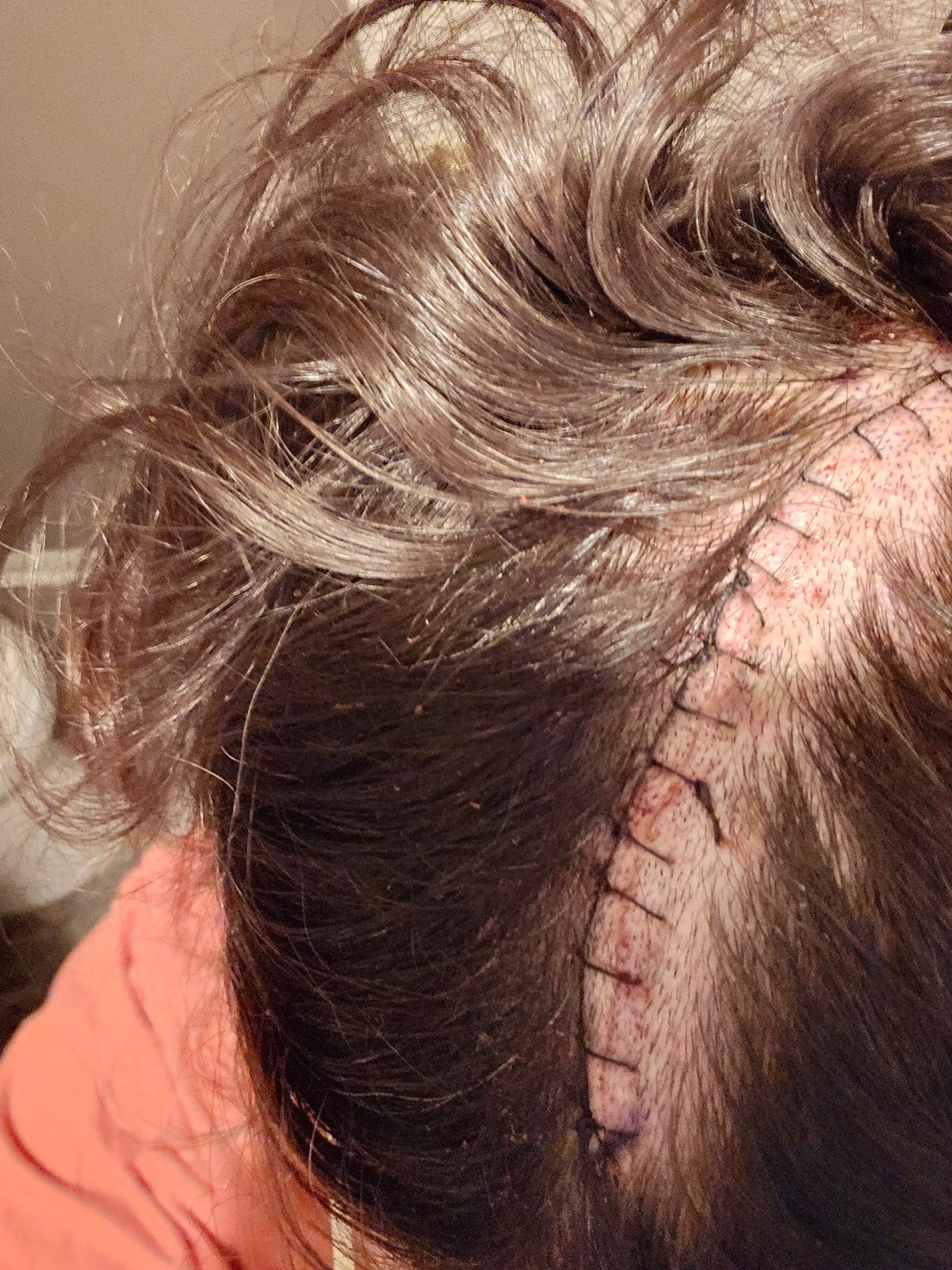
Now that I can see it, I observe that they made a long, maybe ten- or twelve-inch, incision like a sweep along my head to be able to peel back the skin, and it will be easy enough to cover it up with hair flipped the other way. Meanwhile it looks like a movie incision, so neat is it, going from one side of my head fully to the ear on the other side. It is not at all like I expected it to be; I thought it would be a tidy little square or circle near the tumor.
As I write this, I have already forgotten to limit my movement, and bent over my suitcase to get out a clean shirt. People are reminding me, but I’m feeling pretty good and my general speed is quick. I have to be more mindful.
I am relearning.
Next Steps
I will return in about ten days to have an appointment with Dr. Out-of-State, and to inspect the incision and remove the stitches. Meanwhile I am trying to schedule an appointment with my primary care physician at home, to let her know what’s going on.
I still have to avoid bending and lifting and driving. I have a virtual visit in about six weeks. The full internal healing will take seven to twelve months.
I have avoided telling several people about this, for various reasons, but now, in my zeal to educate, I am posting this.
Lessons so far:
Have a good support system
Have good health insurance
Be lucky
Hospitals are filled with dedicated, humane, skilled, inquisitive people with all different jobs and levels, who rely on each other. The guy who cleans came in to mop the floor just because he wanted us to enjoy a better smell. The nurse who showed me how to unplug all the lines wanted to give me more freedom, and dignity, while maintaining concerns about safety. The social worker community person kept asking, “What else are you worrying about?” The PT/OT team took me for my first walk and reminded me of many things to keep in mind. An in-home PT person will come here to show me some things as well.
I’m not exactly religious, though I am a practicing Jew. I am finding this a moment of reflection on health, faith, and indeed education.
July 6, 2026: Recovering
It’s been almost a week since the surgery. I am currently, with Lionel, at my brother Jonathan and sister-in-law Anne’s house. We had been at Mabel’s but there were tremendous Midwest summer storms and the power went out early Saturday morning and it is not going to be restored until very late on Monday.
Jonathan and Anne’s son and daughter-in-law also lost power, so they are here too, with their sweet six-year-old dog Penny, currently trying to get my attention from her cage. I’m the first one up, but I don’t think it prudent to try to control her, placid though she often is.
I finally slept. The first night that felt like real sleep.
Steroids interfere with sleep, I have learned. For several nights, memorably the one before last, for nearly twelve hours I tried to sleep and was asleep perhaps for three or four of them. On Saturday night, waking sporadically and trying to get back to sleep, I read an entire book.
I have no pain, but I have awareness and discomfort around the incision, which goes all the way to my left ear. There is tenderness at both temples still, where the tight bandage had been wrapped, and sores are visible on my forehead from the tight wrap.
Jonathan wondered about painkillers. They had offered me Tylenol or Norcan at the hospital. An easy choice for me: the least intense option possible. I don’t tend to addiction, but why take chances?
I said I hadn’t been taking them, though they were on my discharge sheet. Maybe they would help? We looked for Tylenol, but couldn’t find any. We found Advil, which he said may have some more concern because of bleeding. I asked if I should worry, and, clinician, he said firmly, no.
I felt enormous relief, and when I woke at midnight I was aware of myself being aware of having slept. I slept another chunk.
The next morning Anne noted that there was a bottle of Tylenol behind the extra bottle of Advil. Both agreed that Advil may be more effective, but the recommendations are based on thousands, if not millions, of surgery results, so I’m following the science and taking Tylenol.
People have been offering food, though my appetite is low, and I have gotten many greetings, so many, that I’ve asked Lionel to manage most of them, along with the overwhelming questions about our plans and logistics, coming from all the well-intentioned but numerous family members. (I am the eldest of five children, all with our own children, and several of our children now have their own partners and children, and most live in this area.)
I have taken walks, including a solo walk to the corner and back and around the cul de sac last night. As someone who treasures solitude and quiet, writing now, at 6 am, feels like a nice gift, while I also recognize the absolute dependence I have on all the goodwill around me.
July 8, 2026: Home
Yesterday Lionel and I packed up again, having gone to Mabel’s the night before to assemble everything we had left there in our removal to Jonathan and Anne’s, and we drove home to South Bend. The medical people have not been especially firm about my inability to drive, but I have not been authorized to drive, so Lionel did the driving.
At the best of times, I am not a very happy passenger. I don’t like freeways, and I don’t like trucks, and I don’t like not to be in control. So we drove, following the GPS, which temporarily sent us on a service road, but then was directing us onto the freeway. We drove on the freeway for a while, but it made me quite anxious. There was a lot of construction, and a lot of trucks, even though in the context of this area, it was a pretty low-traffic midday on a Tuesday. Because of the danger of blood clots, following surgery, it was recommended that we stop every hour or so, so we got off at Starbucks in a small town and after that we took the non-freeway route back home.
It took a very long time.
Instead of the freeway route, which would have delivered us at 2 PM, we got home at 3:45, though we had several other stops as well, including a lovely little mini-stop at a roadside picnic table.
We got home and Lionel had to unload the car entirely himself, and we did a lot of unpacking. The house was in good shape, after 10 days on its own, though with the assistance of our friends, Florence and Leo, who had seen to it, and I made a list of things to do and get, including a skid-free bathmat to ensure no falls in the shower. Lionel, always eager to do errands, went to our nearby TJ Maxx, as I recommended, and came home with five options. The ones we liked best were mum about their ingredients, though one of them in faint print on a patterned background, almost invisible, did admit that it was 100% PVC. One of them, our favorite, had fine print from California, warning that the ingredients in this were associated with carcinogenic effects. Only one of them said “no PVC.” So even though it was not the fanciest, cushiest, most-loofah like, it seemed prudent. We found some food to eat, and I began to recover from my profound exhaustion from the drive. I’m not entirely sure why the drive was so grueling, but perhaps it was because of my energetic copiloting as well as my (sarcasm alert!) medical oversight of Lionel’s diabetic control.
Today, Wednesday, I am still waiting to hear about the in-home physical therapy, which I am entitled to, to set up a specific exercise regime that will increase my strength, but only within the permitted limitations of my surgical recovery. The order had been written on Thursday of last week, as I was being discharged, and the social worker who oversees these things was clear that I was entitled to this. Rather than just generic brochures about exercise and light activities, they will actually assess my own needs, and I will presumably get a program that will get me back in shape, perhaps lifting weights or whatever. It turns out, this has been the only weak link so far. I had met with the social worker Thursday afternoon. Apparently she wrote the order, but last Friday was the observed Fourth of July holiday, and then there was a weekend, so the order actually only went in on Monday morning.
As we were driving home on Tuesday, someone called to schedule the visit from the home health company associated with the hospital. I explained that we were on our way home to South Bend. He said I needed to call my local primary care physician to arrange the care. By some miracle, the printed-out paperwork for my discharge was accessible to me, even from my front passenger seat, and I found the name of the social worker, with a phone number, and I called the number and she actually answered. She said that the order has already been submitted for the South Bend portion of it, so she would work on getting that set up. My hope is that that happens sometime during the second half of this week.
All in all, this slower phase of recovery, following the acute phase, is a little bit more fuzzy. I have a graduate student who is in the middle of her qualifying exams. This is at the end of her third year in our doctoral program, and they are required to be completed. Normally they would have been done during the academic year but for a variety of absolutely legitimate reasons she has had to extend them, and the absolute deadline for completion is July 31.
I have been communicating with her and my two fellow committee members (I’m chair of the committee) and I scheduled the email with the questions to be delivered Monday morning, the day before my surgery, with the responses to be returned within a week.
She submitted her responses this past Monday morning, forty-five minutes early. We will have the oral component next week. I am capable of reading and thinking and concentrating, to my great relief, and I have no doubt that I will be able to ask proper questions. Because the exam is so detailed, it ended up being 67 pages, so I asked our administrative assistant to print it at our office, and I will send Lionel out for an errand to fetch that. (Yes, lots of paper, but when I read long things that I need to annotate, I still need paper.)
When our administrative assistant, who had been on vacation last week, read the email I sent to a few people about this whole thing, she wrote, “Wow Susan. I am really kind of shocked by this. I had no idea.”
So now, as I begin to reintegrate myself to whatever extent I am able, I have to perfect my spiel about my summer vacation. I think the easiest is to say I had some surgery, but I’m fine.
The pathology report, uninterpreted, has arrived. It does not have a general conclusion.
July 15, 2026: The Longer Recovery
Most summers for the last quarter-century my parents have rented a big house on Lake Michigan, inviting every one of their children, spouses, grandchildren, and now great-grandchildren, to come visit at some point during the week. Most but not all come, some for a night and some for the whole week. Everyone brings food, and each family unit, or a few solos bundled together, cook dinner one night. Others do the dishes. We order pizza the first night and have leftovers the last night. There’s always a lot of cereal and snacks. Someone has to shop for something needed nearly every day, if not more. Often we leave with more food than we come with.
This had been planned for months; sitting here at the lake seemed surrounded by people who love me and understand my situation seemed like a great idea, though I did have a period of near-anxiety and near-panic as I packed up for the sixth time in two weeks.
The house has good WiFi, so I’ve been able to conduct personal and professional business from here.
I have now had the virtual, two-week follow-up visit (they mercifully changed it from an in-person visit, which would have necessitated two four-hour drives) with the intake neurosurgeon, Dr. Out-of-State, who advised me to gradually reintroduce activity, and reminded me that we are still awaiting the final pathology report, which is dependent on some new genetic test that will “grade” the tumor. The initial report has a lot more complicated features than I’d expected, “The tumor is composed of a proliferation of meningothelial cells arranged in fascicles, whorls, and lobules.” I’d expected it to be smooth and homogenous like a mushroom. In a soothing clinical manner, he said that it would just tell us if we need to follow up with one single MRI or if we’ll need more than one. It seems to be between CNS [Central Nervous System] WHO grade 1 and 2—neither benign nor malignant. (Apparently this is a false dichotomy.) I’m not thrilled about it, just as I wasn’t thrilled when they said the surgery was around a level 3 in terms of difficulty between 1 and 10. I wanted it to be 1.
Research scientists and clinicians have different answers to the same question, apparently.
Yesterday Lionel and I drove to my local doctor’s physician assistant, who removed the staples—there were eight—and stitches (she stopped counting, there were so many).
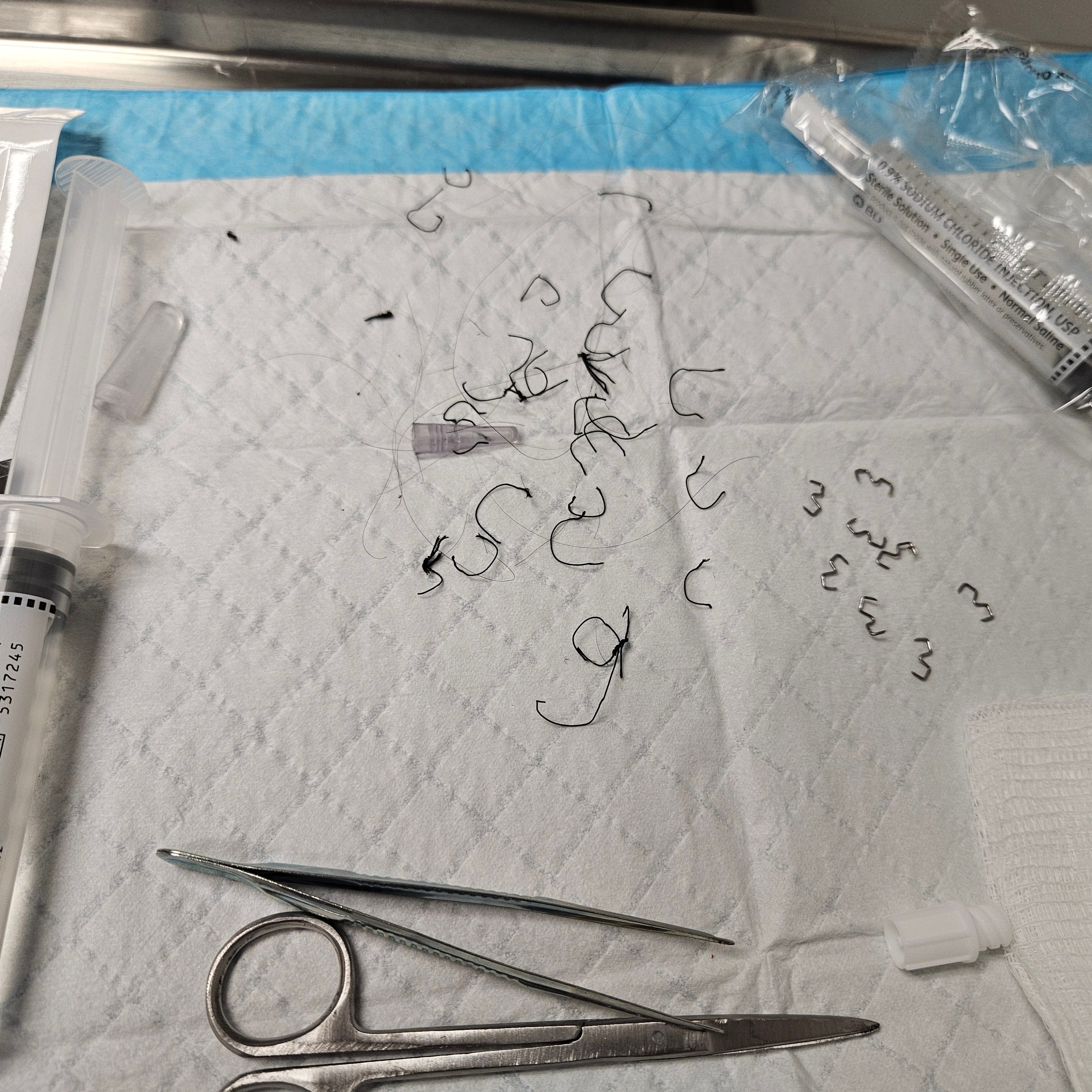
She recommended that I continue the restrictions for two more weeks.
My main concern is what I have now learned much about, increasing intracranial pressure (which is sometimes done intentionally, in what is called the Valsalva maneuver, for some cardiac issues). This holding-breath-to-increase-pressure can be helpful for heart issues. It is absolutely to be avoided by someone who has had brain surgery. It’s what happens when you bear down with weightlifting, or in some yoga poses, or in bowel movements. I’ve had a lot of discussion of my bowel movements.
I asked the PA too about my upcoming planned trip to give a talk at a university that I am very eager to see in person. I’ve made my reservations to fly and stay at the hotel.
Like my surgeon and several other people, she said she thought it was “early” to fly.
“Would you probably be fine? Yes. If you had to, you probably could. But it might be a little early.”
Today I sent a long-dreaded email, regretfully offering to do a virtual talk rather than go in person. Their conference is important to me. I am eager to visit their innovative campus. But does it rise to the level of essential?
This whole experience has been clarifying.
I have played with my granddaughter.
I have conducted an oral exam, virtually, for a doctoral student, building on her written answers. I have answered a few emails.
At the clinic yesterday, we encountered a woman I know from several contexts.
“How is your summer? Have you been traveling?”
And I think this is the answer I’m going to keep giving, except when I have the energy to elaborate:
“We’ve been in and out of town, doing a variety of things. It’s been a good summer.”
July 20, 2026: Learning Well: Lessons about Learning from Brain Surgery
In our era there are multiple attacks on expertise and the notion of science. I have been involved for decades in activities to improve education and make it more authentic, and one of the approaches is to focus on genuine motivation. One way to do that is to de-emphasize grades in favor of fostering individual commitment to learning for authentic reasons.
A colleague, John Warner, in his contribution to a book I edited, Ungrading: Why Rating Students Undermines Learning (and What to Do Instead), wrote about his response to people’s horror when he says that he does not want to use grades. In his chapter “Wile E. Coyote, the Hero of Ungrading,” he writes, when he introduces the idea of ungrading, people often raise the topic of proficiency.
“I want my doctor so far beyond proficient that proficiency can’t even be seen in the rearview mirror. I don’t want my doctor even flirting with proficiency, let alone settling down with it for the duration of their career. I want my doctor obsessed with being the best doctor possible on a day-to-day, moment-to-moment basis. I want my doctor inhabiting their ‘practice’—the skills, attitudes, knowledge, and habits of mind of doctors—as though it is a second skin.” (p. 211)
He writes idealistically, “Doctors are significantly motivated by attitudes that invoke values like caring for others, a sentiment embodied in their professional oath” (p. 212). They can’t just go through the motions, pretending they are learning. They have to learn for real.
I observed my doctors, nurses, medical technicians inhabiting their practice, experts committed to good outcomes, even if they are also motivated by ordinary vocational concerns of salary. Their motivation helps fuel them through their training.
In fiction writing, authors have to make sure that “the stakes” are high. Otherwise readers will not care.
In brain surgery, the stakes could not be higher.
Several people have told me how many years neurosurgeons spend learning: thirteen, by one measure: four years of college, four years of medical school, five years of residency. Many, like the resident involved in my surgery, do more than that.
Several people have told me a joke about a party or a bar where a brain surgeon and a rocket scientist meet to one-up each other.
We could also see high stakes, genuine motivation, in some other medical situations. And in education in general?
When the stakes are real, authentic, students are invested in making sure they learn well and for the long term. When the stakes are entirely extrinsic, the real investment is minimal.
July 31: A Month Out
So here I am, a month out from the surgery. I have begun to do normal things, such as prepare to give a talk, virtually, next week, and I have had at least three Zoom meetings in the last week with two new people and one familiar person about professional topics.
I’m starting to revise my syllabi for the fall semester.
I have even begun to bake sourdough bread again, which, as I write, is proofing in the kitchen, but the Dutch oven in which I bake it is too heavy for me to lift, still, so I am forced to rely on Lionel’s lifting of it from the oven once it is baked.
When I scratch my head, my skull sounds different, because of the materials packed inside. The clinical notes mention what was implanted: a sealant (dural adherus autospray); a flexible sheer weave surgicel; a hemostatic bonewax; a hemostatic human vistaseal fibrin; a surgiflo kit with thrombin; a patch bovine dura-guard graft; and much more.
An attentive physical therapist, “Caitlin,” came three times: to assess, to work with me, and to discharge. She gave me exercises for leg strengthening and balance, and spoke with me about how to gradually reintroduce strength training once I’ve reached the six-week mark.
I have had several events, including an in-person dissertation prospectus defense, which truly was exhilarating and also depleting. Intellectual work is noticeably tiring and social interaction can also be fatiguing.
I am much more mindful of every activity; I have learned to squat down to tie my shoes rather than bend over. I am choosing to forgo some events.
I chose to skip an annual summer gathering hosted by a friend of mine where women get together for a potluck and conversation every summer . But this year I realized that while it was fun, there would be people I did not know well or at all, and the work of having to explain and monitor and limit my responses was beyond me.
In contrast, my husband’s cousin—a musician and retired professor and current tutor and incredible storyteller—came and stayed for two days, and his stories and presence were invigorating. He had also lost his wife to cancer three years ago, and we were thrilled to see him remembering her while also plunging into the world again.
I am still awaiting the final genetic testing of the tumor, an up-to-date sophisticated grading of the tumor. I suspect there may be more scans in my future.
One thing that has been a bit of a surprise is that almost everybody has a story about someone with a brain tumor. Lionel and I went with two friends to see the native plant garden of a woman with a local business, and “Frida” said that her father had a meningioma which was discovered when he fell off his bicycle at the age of 80, and her late husband had died quickly of a glioblastoma.
A colleague told me about a close friend of his who suddenly discovered a brain tumor.
“Was she okay?”
A beat.
“She died.”
A friend from my synagogue had a brain aneurysm, discovered by accident, and is back to running.
There is a Brain Tumor Network that came up for me on Instagram, but only after the surgery.
I see references to brain tumors every day now. I notice with great sorrow all the loved ones lamenting their children’s, partners’, parents’, friends’, deaths of brain tumors and cancers.
As several of the doctors said, “If you had to pick a brain tumor to have, you picked the right one.”
As I face this new post-brain-tumor season of my life, I feel committed to savoring all my possibilities. I know I have some that others don’t.
Final Thoughts as Summer Moves Toward August (= Academic Autumn)
“Don’t worry about it. It’s not brain surgery.” We dismiss concerns about precision, and details.
Sometimes it really is brain surgery.
More lessons:
Moving from place to place is stressful. If you can recover in a single location, that is better
You don’t owe everyone you see a complete explanation
It takes energy to answer even offhand, casual inquiries. It’s good to have a prepared, true-but-not-complete response ready
Expertise is essential, and must be cultivated, motivated, supported. It might take a long time. It is truly motivated by caring about high stakes
Science and medicine (socially applied science?) are imperfect but at their best correct their mistakes and improve
I am the luckiest person alive. I hope to remember this every day for as long as I am able
Sometimes they say, “Well, it’s not brain surgery.”
And sometimes it is.
And when it is, I want to have, and I want everyone to have, access to brilliant professionals focused on their outcomes, not on a mere grade or metric, but the real, authentic deal, the life-and-death, health-and-recovery, the dignity-and-meaning outcome.
Thank you for sharing your experience, Susan. Your account was so moving; I could sense your unique spirit and personality in the writing. I will pray for you to have continued good health.
Thank you for this generous (and genuinely impressive) account of your surgical journey.
I have been praying for you daily from my own Catholic faith tradition (in Italian) to the patroness of your great school (whom, it bears repeating, your and my alma mater taught to play football):
O Maria, Madre nostra e Consolatrice degli afflitti, guarda con tenerezza tutti i nostri cari che soffrono nel corpo e nello spirito, specialmente Susan Blum. Intercedi per loro presso il tuo Figlio Gesù, affinché possano trovare sollievo nel dolore e pronta guarigione. Sii per loro un rifugio sicuro e dona la grazia della serenità alle loro famiglie. Amen.